 FoVR Interactive
FoVR Project
Smart Glasses Spatial HUD Experiments
Lightweight display prompts and hands-free interface patterns for wearable XR.
A FoVR Labs research entry exploring what useful HUD-style experiences could look like on smart glasses and lightweight display devices.
Overview
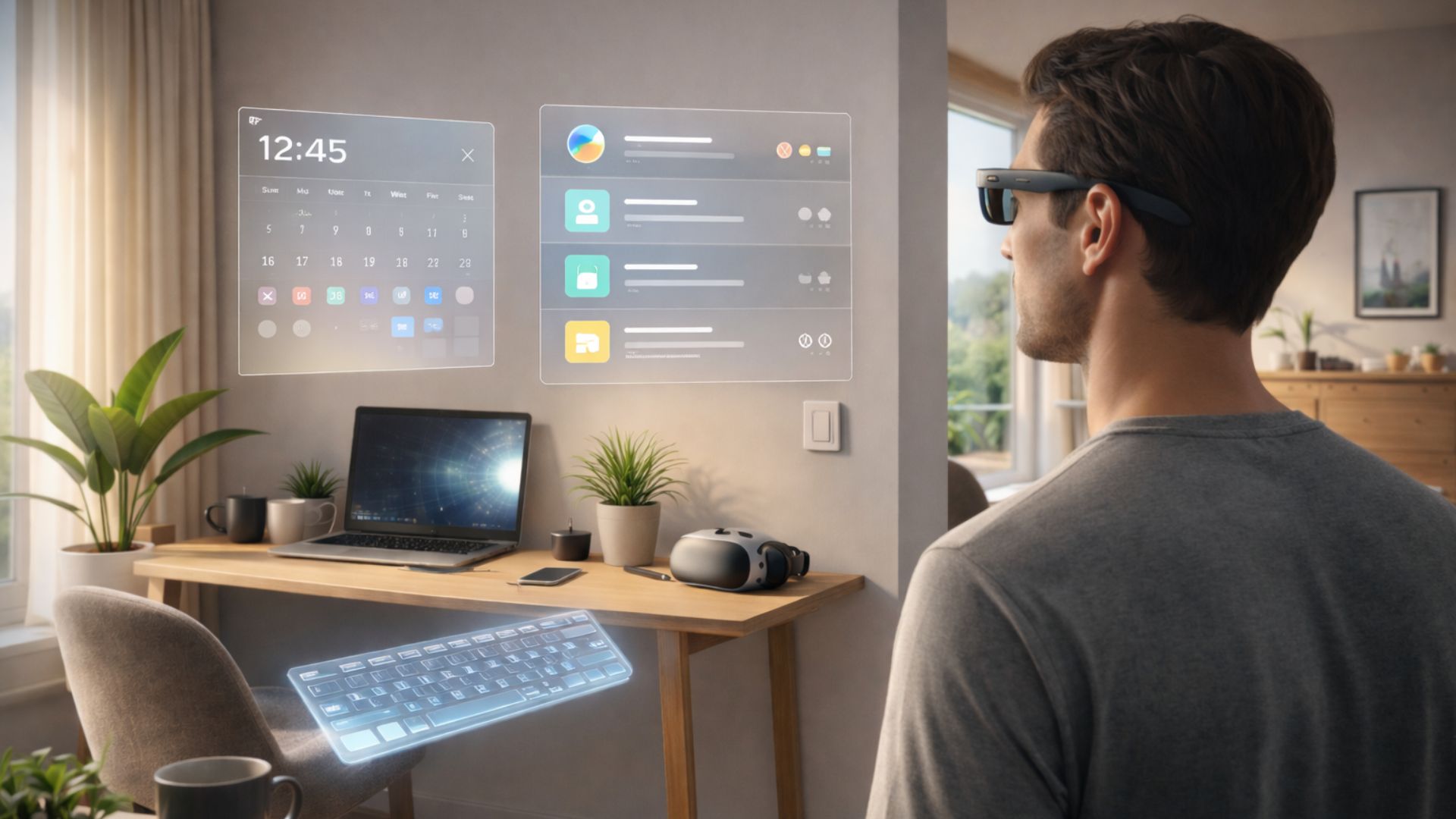
Smart Glasses Spatial HUD Experiments is a FoVR Labs research entry focused on lightweight XR interfaces: prompts, status panels, guided steps and hands-free information that could live on smart glasses or display glasses.
The project direction is not about recreating a full VR interface on a small display. It is about asking what information is actually useful when it appears at the right time, in the user’s field of view, without pulling them away from the task.
Goals and objectives
Explore lightweight spatial prompts
Test the idea of small, focused interface elements that support a task without overwhelming the user.
Think beyond headset-first XR
Use smart glasses and display glasses as a way to explore more wearable, everyday XR patterns.
Connect Quest MR behaviour to future glasses
Use what mixed reality headsets already prove about spatial UI and apply those lessons to smaller wearable displays.
Key ideas
Hands-free workflows
Smart glasses become most interesting when they reduce the need to look down at a phone, laptop or checklist.
Contextual prompts
The most useful HUD elements are not the biggest ones. They are the ones that show the right instruction, status or confirmation at the right moment.
Wearable acceptability
A major part of this research is thinking about what people would actually wear and accept in day-to-day work or life.
Display-first before full AR
Even before full spatial AR glasses are mainstream, display glasses can teach useful lessons about field-of-view, glanceable UI and information hierarchy.
Lab notes
This entry is marked as research because it is more about direction and interaction thinking than a single shipped app.
It belongs on FoVR because it connects the studio’s XR work to the next hardware wave: smaller devices, more wearable interfaces and spatial prompts that help people do real things.