 FoVR Interactive
FoVR Project
Brick Forge MR
Mixed reality building instructions for playful hands-on assembly.
A Meta Quest Presence Platform prototype that displays step-by-step 3D building instructions in passthrough using spatial anchoring and hand tracking.
Overview
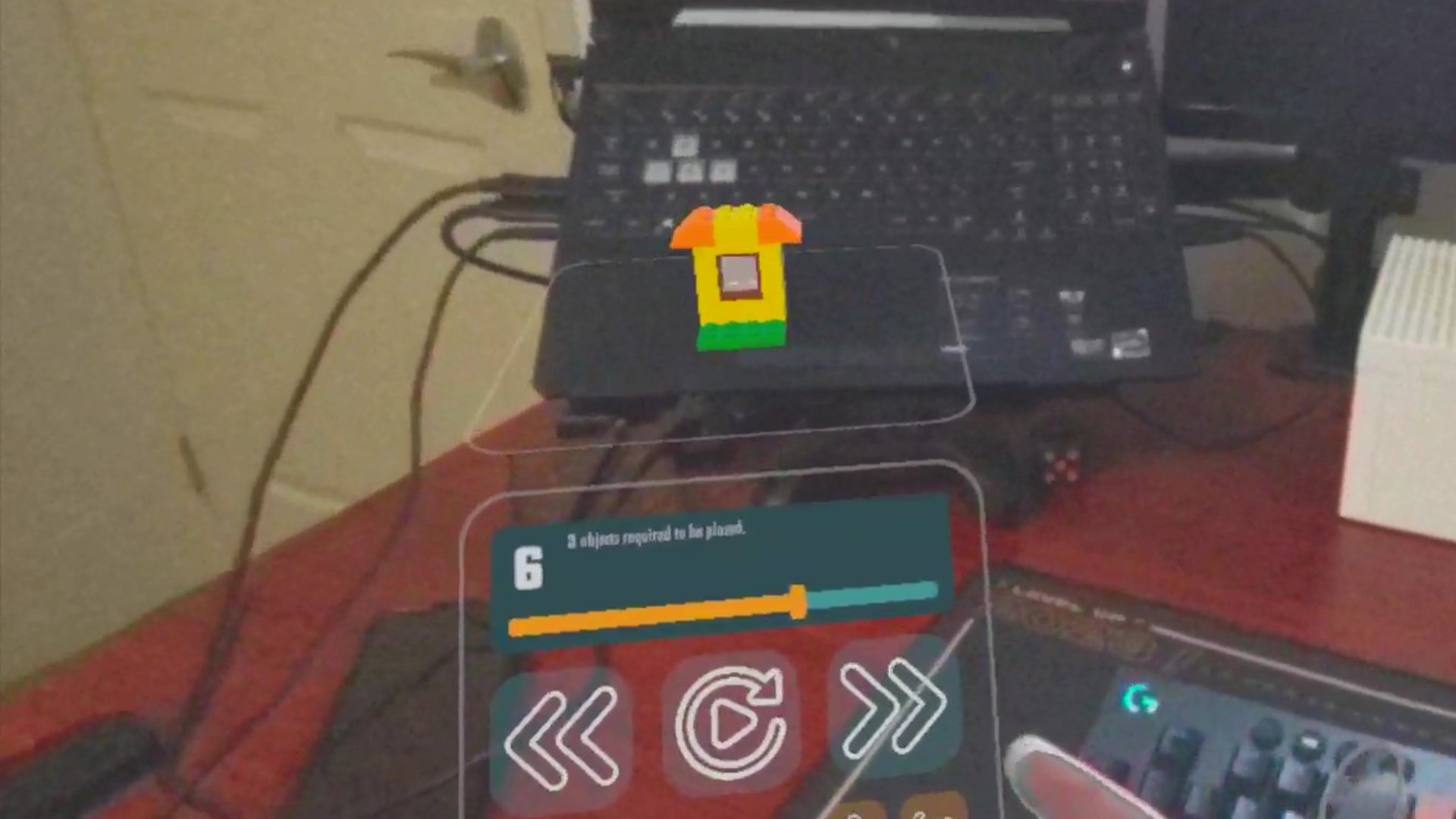
Brick Forge MR is a mixed reality instruction viewer built for the Meta Quest Presence Platform Hackathon. The idea is to make building instructions feel more spatial, using passthrough to place step-by-step 3D guidance into the user’s real environment.
Rather than relying on a flat instruction booklet or a phone screen, Brick Forge lets the user inspect building steps in 3D, rotate the model and keep instructions anchored around them while they build.
Goals and objectives
Make instructions spatial
Turn a traditional instruction flow into something that can be placed, viewed and understood in real-world space.
Use hands-free interaction
Explore hand tracking as a natural way to move through steps, inspect models and interact without needing controllers.
Test mixed reality learning patterns
Use a playful building task to test ideas that could also apply to training, maintenance, assembly and guided workflows.
Key features
Passthrough building instructions
Instructions can be viewed in mixed reality, letting the user keep their physical workspace visible while following virtual guidance.
3D model inspection
Users can rotate, zoom and inspect building steps from multiple angles instead of relying on a fixed 2D diagram.
Spatial anchoring
Instruction elements can stay positioned in the user’s environment, making the experience feel more like a real workspace tool.
Quest-focused prototype
The project was built around Meta Quest capabilities including passthrough, hand tracking and the Presence Platform.
Lab notes
Brick Forge MR belongs in FoVR Labs because it shows how playful spatial interaction can lead into useful training and instruction patterns.
It is a good example of the kind of prototype FoVR should show: clear concept, visual demo, practical XR behaviour and a strong link between play and learning.